

Global Leather Demand: Growth and Buyer Preferences
Posted by The Green Tanners on 5th Dec 2025

The global appetite for leather is expanding, driven by evolving consumer tastes and new market trends. As demand grows, buyer preferences are becoming more sophisticated. This article explores the forces behind this growth and what discerning customers now prioritize.
Understanding the Growth in Leather Demand
The global leather goods market is experiencing steady growth. This expansion is not just about quantity; it is also about a shift in what consumers value. People are increasingly seeking products that offer durability, timeless style, and a connection to craftsmanship. This trend pushes the industry forward, favoring quality over mass production.
A key driver is the rising disposable income in emerging economies. As more people can afford luxury items, the demand for high-quality leather products like handbags, footwear, and accessories increases. Furthermore, the enduring appeal of leather as a premium, long-lasting material keeps it relevant in fashion and design. According to a report by Grand View Research, the global leather goods market is projected to continue its upward trajectory, showing the material's lasting power.
Key Statistics Driving the Market
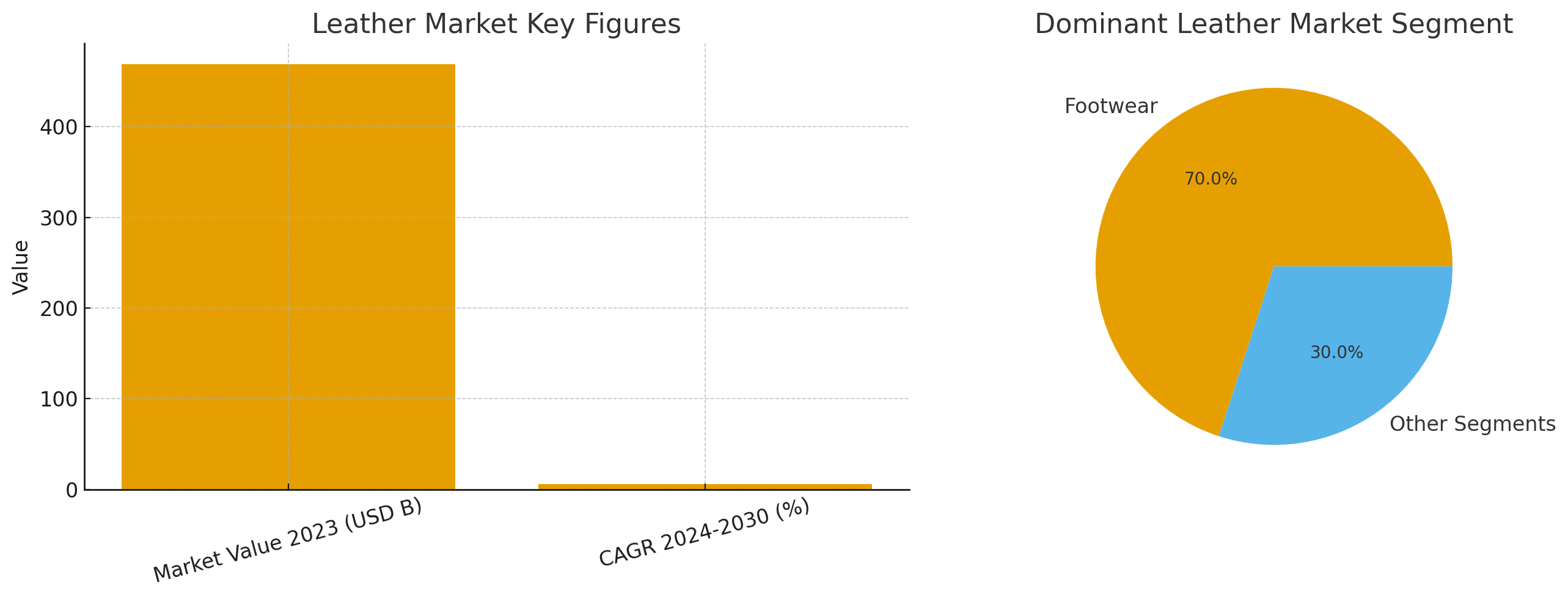
Data provides a clear picture of the leather industry's health and direction. The numbers show a consistent pattern of growth, supported by strong consumer interest across various sectors. The automotive industry, for example, remains a major consumer of leather for interiors, linking the material to luxury and comfort. Similarly, the fashion industry continues to rely on leather for its premium collections.
Here's a breakdown of the data:
- The global leather goods market was valued at USD 468.49 billion in 2023, as reported by Grand View Research. This figure highlights the significant economic footprint of the industry.
- Projections from the same source indicate the market will grow at a compound annual growth rate (CAGR) of 6.2% from 2024 to 2030. This steady growth rate signals strong and sustained consumer confidence in leather products.
- The footwear segment dominates the leather market, accounting for a major share of consumption. This is a long-standing trend that continues to hold.
- A Mordor Intelligence analysis points to the Asia Pacific region as a major force in market growth, thanks to a large population and increasing purchasing power. This geographic shift influences production and style trends globally.
This data-focused view shows that the demand for leather is not just stable but actively growing. The consistent CAGR and high market valuation underscore its importance in the global economy. This growth is fueled by both traditional uses, like footwear, and expanding applications in other luxury sectors.
Data Block: Leather Market at a Glance
- Global Market Value (2023): USD 468.49 billion (Source: Grand View Research)
- Projected CAGR (2024-2030): 6.2% (Source: Grand View Research)
- Dominant Market Segment: Footwear (Source: Grand View Research)
- Key Growth Region: Asia Pacific (Source: Mordor Intelligence)
What Are Today's Leather Buyers Looking For?
Modern consumers have a clear set of priorities when purchasing leather. They are more informed and selective than ever before. Their preferences shape what manufacturers produce and how brands market their products.
The Importance of Quality and Durability
Quality remains the top priority. Buyers want leather goods that are "built to last." They see their purchases as investments, not as disposable items. This desire for longevity means customers pay close attention to the materials and the craftsmanship. They are willing to pay more for a product that will withstand years of use.
Expert Insight: A master tanner often says, "True quality in leather isn't just about how it looks on day one, but how it looks on day one thousand." This highlights the importance of aging gracefully, a characteristic of high-quality leather known as developing a 'patina'. The best leather goods gain character over time.
For example, a customer might choose a $300 full-grain leather belt over a $50 bonded leather one. The cheaper belt may look good initially, but it will likely crack and fall apart within a year. The full-grain belt, however, could last for a decade or more, making it a better value in the long run.
Explore our guide How Leather Is Made: From Raw Hide to Finished Material
The Shift Towards Sustainable and Ethical Leather
Sustainability is no longer a niche concern. A significant number of consumers actively seek out leather products made with environmentally friendly practices. This includes looking for leather produced using vegetable tanning methods or from tanneries with transparent, ethical supply chains.
Buyers are asking important questions:
- Where did this leather come from?
- What was the environmental impact of its production?
- Was it sourced ethically?
Brands that can provide clear, positive answers to these questions gain a competitive advantage. This demand for "sustainable elegance" is a powerful force in the contemporary market.
Understanding Key Leather Terminology
To make informed choices, it is helpful to know some basic leather terminology.
- Tanning: This is the process of treating animal hides and skins to produce leather. Tanning makes the hide durable, less susceptible to decomposition, and ready for use. The two most common methods are chrome tanning and vegetable tanning.
- Grain: The grain refers to the natural surface pattern of the hide. Full-grain leather, which uses the outermost layer, is the highest quality because it retains the original texture and markings of the hide.
- Thickness: Leather thickness is typically measured in ounces or millimeters. A one-ounce weight is equivalent to 1/64th of an inch. The required thickness depends on the product; a wallet needs thin, flexible leather, while a sturdy belt requires thicker, more rigid leather.
- Leather Grades: This system categorizes leather based on the part of the hide used and its treatment. The main grades are full-grain, top-grain, genuine, and bonded leather, with full-grain being the most desirable.
Full-Grain vs. Top-Grain Leather: A Comparison
Choosing between full-grain and top-grain leather is a common decision for buyers. Both are high-quality options, but they have key differences in durability, appearance, and cost. Understanding these distinctions helps you select the right leather for your needs, whether you prioritize a natural, aging aesthetic or a uniform, protected finish. This table compares their main characteristics to guide your choice.
| Feature | Full-Grain Leather | Top-Grain Leather |
|---|---|---|
| Surface | Natural, with original markings | Sanded and refinished |
| Durability | Highest level of durability | Very durable, but less than full-grain |
| Aging | Develops a rich patina over time | Ages more slowly, less patina |
| Breathability | Excellent | Good, but reduced by the finish |
| Cost | Most expensive | Less expensive than full-grain |
Learn Leather Care 101: How to Make Your Leather Last Longer.
Frequently Asked Questions (FAQ)
What is the most durable type of leather?
Full-grain leather is widely considered the most durable and highest-quality leather available. It comes from the top layer of the hide and includes all the natural grain. Its fibers are tightly packed, making it incredibly strong and resilient. Over time, instead of wearing out, full-grain leather develops a beautiful patina, which adds to its character. This makes it an ideal choice for products that see a lot of use, such as belts, bags, and high-quality footwear.
Is leather environmentally friendly?
The environmental impact of leather depends heavily on the tanning process. Traditional chrome tanning uses chemicals that can be harmful if not managed properly. However, vegetable tanning, an older method that uses natural tannins from plants, is a much more eco-friendly alternative. Additionally, many tanneries are now adopting sustainable practices, such as water recycling and responsible chemical management, to reduce their footprint. Consumers can support this shift by choosing products from brands that prioritize sustainable sourcing and production.
How can I tell if a leather product is high quality?
You can assess leather quality by checking a few key things. First, look at the grain; high-quality leather often has natural imperfections. Second, feel the texture. It should feel supple and natural, not like plastic. Third, smell the product. Real leather has a distinct, rich scent. Finally, check the edges. On a premium item, the edges will be smooth and well-finished, not raw and fraying.
Conclusion
The global demand for leather is on a clear upward path, but the nature of that demand is changing. Today's buyers are sophisticated, prioritizing long-lasting quality, craftsmanship, and sustainability over fast fashion. They are investing in pieces that tell a story and endure for years. As the market grows, brands that align with these values, offering durable, ethically produced, and timelessly elegant goods, will be the ones that thrive. This conscious consumerism is not just a trend; it is the new standard for the modern leather industry.
Ready to invest in quality that lasts? Explore our collection of sustainably crafted leather goods.