

How Leather Recycling Rates Compare With Other Materials
Posted by The Green Tanners on 10th Dec 2025
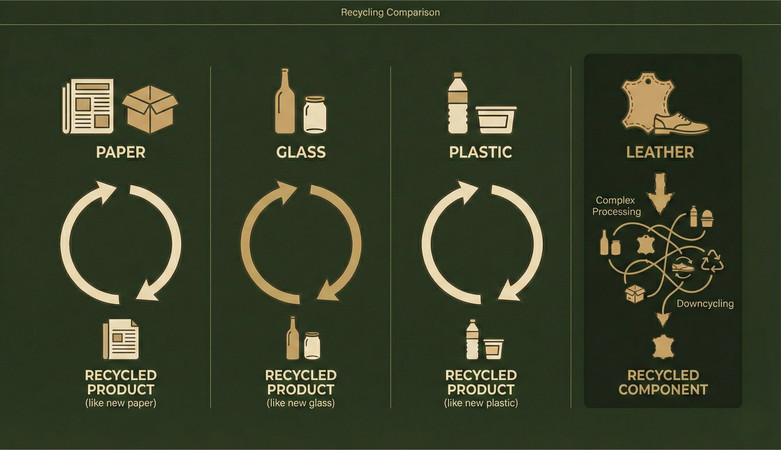
Leather is a unique and durable material, but how does its end-of-life journey compare to common materials like plastic, glass, and paper? We often hear about recycling bottles and paper, but leather recycling is a less-discussed topic. This article explores leather's place in the world of recycling and sustainability.
Understanding Leather and Its Recycling Potential
Before comparing recycling rates, it's important to understand what makes leather recycling different. Leather is not a synthetic product; it is a natural material derived from animal hides. The process it undergoes, called tanning, transforms it into a durable, long-lasting textile.
What is Tanning?
Tanning is the process of treating animal skins and hides to produce leather. This treatment stabilizes the protein structure of the skin, making it more durable and less susceptible to decomposition. Tanning prevents the hide from putrefying and prepares it for use in various products, from shoes to furniture. This process is crucial to leather's longevity, but it also complicates its end-of-life recycling.
Key Leather Terminology
Understanding a few key terms helps when discussing leather quality and recycling.
- Grain: The grain refers to the outermost layer of the hide, where the hair was. Full-grain leather, which includes this entire outer layer, is the highest quality. It is known for its durability and the unique patina it develops over time.
- Thickness: Leather thickness is typically measured in ounces or millimeters. The thickness required depends on the final product. For example, a wallet needs thinner leather than a sturdy work boot.
- Leather Grades: Leather is sorted into different grades based on the quality of the hide and the finishing processes. The main grades are full-grain, top-grain, genuine, and bonded leather. Full-grain is the best, while bonded leather is made from leftover scraps and fibers bonded together.
How Does Leather Recycling Work?
Leather recycling is not as straightforward as recycling glass or aluminum. The material cannot simply be melted down and reformed. Instead, leather recycling involves mechanically or chemically breaking down used leather products into fibers.
These reclaimed leather fibers are then typically mixed with binding agents, like polyurethane or natural rubber, and pressed into sheets. This creates a new material often called recycled leather, bonded leather, or reconstituted leather. This recycled material is used for belts, shoe insoles, and backing for other materials.
Leather Recycling Rates vs. Other Materials
Directly comparing the recycling rate of leather to materials like paper or plastic is challenging. This is because standardized, global data for leather recycling is not as widely tracked. However, we can analyze available data for other materials to establish a benchmark and understand where leather fits into the broader recycling landscape.
A Data-Driven Comparison
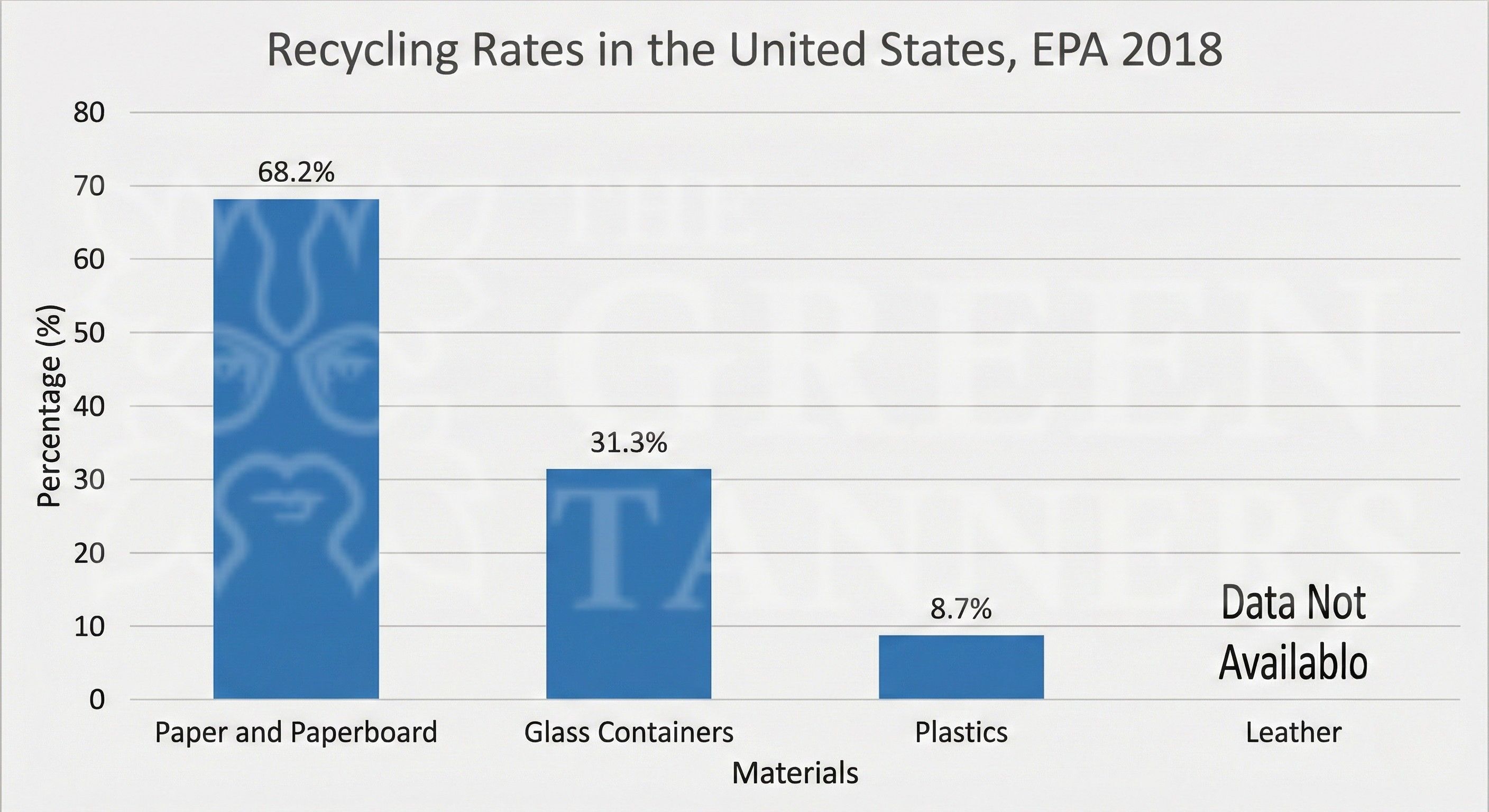
Let's look at the numbers for some of the most commonly recycled materials in the United States.
According to the Environmental Protection Agency (EPA), paper and paperboard have one of the highest recycling rates. In 2018, the recycling rate for paper and paperboard was 68.2%. This means over two-thirds of all paper products were successfully recovered and recycled.
Glass containers also see significant recycling efforts. The EPA reports a recycling rate of 31.3% for glass containers in the same year. While lower than paper, this still represents millions of tons of material being diverted from landfills.
Plastics, a major focus of environmental concern, have a much lower recycling rate. The EPA's 2018 data shows that only 8.7% of all plastics generated were recycled. This low rate highlights the challenges associated with the numerous types of plastic and the complexities of sorting and processing them.
So, where does leather stand? Precise figures are scarce, but industry practices show that a significant portion of pre-consumer leather, the scraps and offcuts from manufacturing, is recycled. These scraps are often turned into bonded leather. Post-consumer leather recycling, which involves recycling used products, is less common. Many leather goods are either repaired, resold for reuse, or ultimately discarded in landfills.
Data Block: Recycling Rates at a Glance
- Paper and Paperboard: 68.2% recycling rate (EPA, 2018)
- Glass Containers: 31.3% recycling rate (EPA, 2018)
- Plastics: 8.7% recycling rate (EPA, 2018)
- Leather: No standardized rate, but pre-consumer scrap recycling is common in the industry.
Comparison Table: Material End-of-Life
| Material | Primary Recycling Method | Common Recycled Products | Key Challenges |
|---|---|---|---|
| Leather | Fiber reclamation | Bonded leather, fillers, composites | Tanning chemicals, mixed materials (zippers, etc.) |
| Paper | Repulping | New paper, cardboard, insulation | Contamination, fiber degradation |
| Glass | Crushing and melting | New bottles and jars, fiberglass | Color sorting, contamination |
| Plastic | Melting and reforming | New containers, fibers, lumber | Many different types, low value |
This table shows the different paths materials take after their first life. Leather is unique because it's broken down into fibers rather than melted. This process creates a lower-grade material, unlike glass, which can be recycled into new bottles of the same quality. The biggest hurdle for leather is the presence of tanning chemicals and other components like metal buckles or fabric liners, which must be removed before recycling can occur.
The Role of Durability and Repair in Leather's Sustainability
When discussing leather's environmental impact, recycling is only one part of the story. The material's exceptional durability plays a significant role in its sustainability.
An expert in leathercraft might say, "A well-made, full-grain leather bag isn't something you use for a season; it's something you can use for decades." High-quality leather products are designed for longevity. For example, a pair of leather boots might last 10 years with proper care, while a synthetic alternative might only last for one or two seasons.
This longevity means fewer items are consumed and discarded over time. Repair is also a key factor. A torn seam on a leather jacket or a worn-out sole on a shoe can be repaired. This culture of repair and maintenance, which is less common for fast-fashion items, extends the life of leather goods and keeps them out of landfills.
Explore our guides on Global Leather Demand: Growth and Buyer Preferences
The Future of Leather Recycling and Sustainability
Innovation is driving new possibilities for leather. Researchers and companies are developing new ways to recycle leather more effectively. Some are exploring methods to create higher-quality materials from recycled leather fibers. Others are working on bio-based tanning agents that make the leather easier to break down and recycle at the end of its life.
As consumers become more environmentally conscious, the demand for sustainable and recyclable materials grows. This pressure encourages the leather industry to continue improving its practices.
To stay informed on industry standards and innovations, visit the websites of organizations like the [Leather Working Group] or [The Green Tanners].
Frequently Asked Questions
Is leather biodegradable?
Leather is a natural material, so it is biodegradable. However, the tanning process significantly slows down its decomposition. Chrome-tanned leather, which is very common, can take a very long time to break down. Vegetable-tanned leather, on the other hand, biodegrades more readily. The biodegradability depends heavily on the specific tanning methods and chemicals used in its production.
What is better for the environment, real leather or faux leather?
This is a complex question with no simple answer. High-quality real leather is very durable and can be repaired, leading to a long lifespan that reduces overall consumption. However, its production involves animal agriculture and chemical tanning. Faux leathers, which are often plastic-based (like PVC or polyurethane), avoid animal products but are derived from fossil fuels. They are also less durable, leading to more frequent replacement, and can release microplastics. The most sustainable choice depends on factors like the source of the leather, the type of faux leather, and how long the product is used.
Can I put leather in my home recycling bin?
No, you should not put leather items in your curbside recycling bin. Municipal recycling programs are typically equipped to handle paper, glass, plastic bottles, and metal cans. Leather requires a specialized recycling process that these facilities cannot accommodate. Putting leather in your bin can contaminate other recyclables.
Conclusion
While leather does not have the high, standardized recycling rates of paper or glass, its sustainability profile is unique. The industry focuses heavily on using pre-consumer scraps, and the material's incredible durability promotes a culture of longevity and repair over disposal. Unlike plastics, which have a very low recycling rate and a short lifespan, high-quality leather goods can last for generations, reducing overall waste. As technology evolves, the potential for more efficient post-consumer leather recycling continues to grow, further enhancing its position as a long-lasting material.
You get sustainably sourced, well-made leather goods here. Shop our pants and invest in quality that lasts.