

Straitjacket Bondage Guide
Posted by The Green Tanners on 20th Dec 2025
Definition, History, Uses, Safety, and Modern Context
A straitjacket is one of the most recognizable restraint devices in modern history. Its image is deeply embedded in cultural memory, often associated with psychiatric institutions, confinement, and loss of control. Over time, however, the meaning and use of the straitjacket have evolved. Today, the term straitjacket bondage is primarily discussed in educational, historical, and consensual adult contexts rather than medical ones.
This article provides a comprehensive, factual, and neutral overview of straitjackets. It examines their origin, design, historical role, modern applications, and ethical considerations. The goal is to present accurate information that supports informed understanding while clearly separating historical misuse from modern, consent-based practices.
Quick Facts About Straitjackets
- Primary entity: Straitjacket
- Category: Garment-style restraint device
- Core function: Arm immobilization
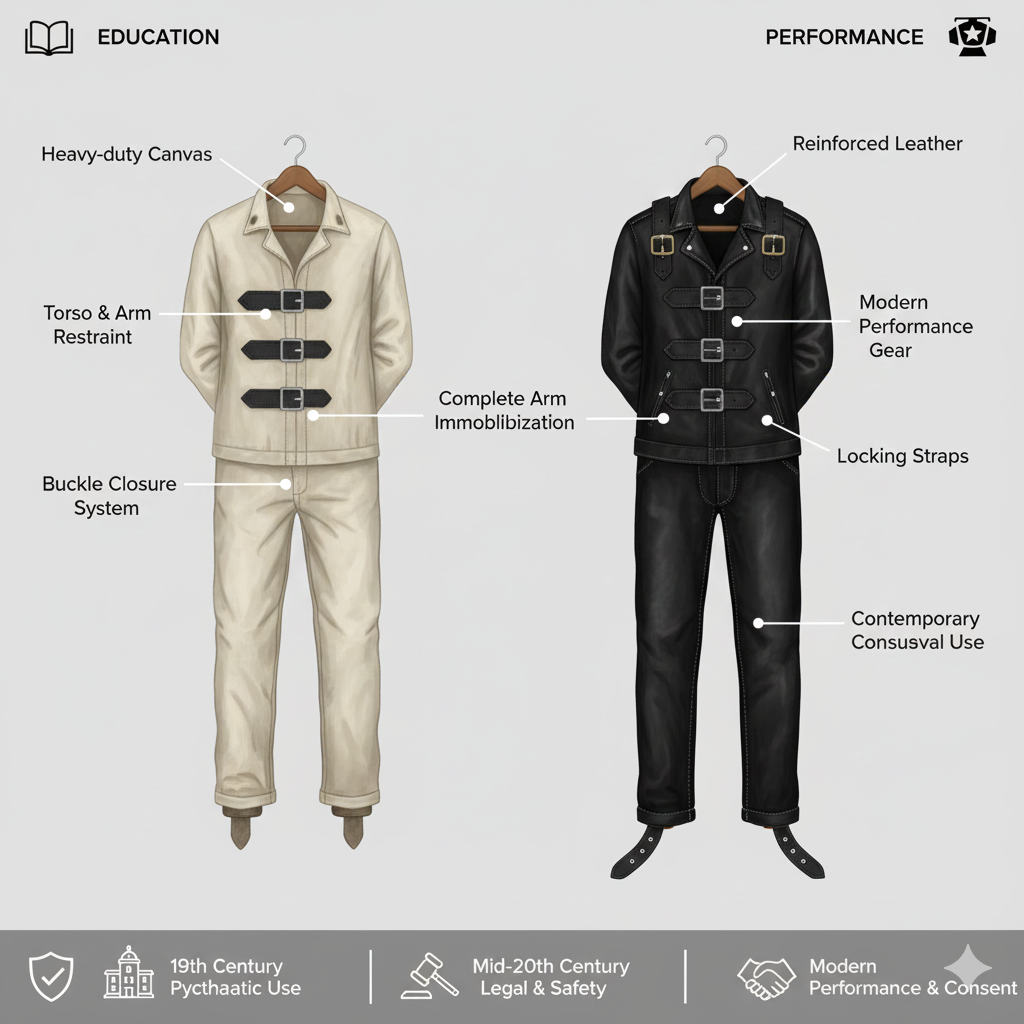
- Traditional materials: Canvas, heavy cotton
- Modern materials: Leather, reinforced fabrics
- Historical use: Psychiatric and institutional settings
- Modern use: Performance art, education, consensual restraint
- Key distinction: Consent and purpose define legitimacy
What Is a Straitjacket?
A straitjacket is a garment-like restraint designed to restrict arm movement by securing the wearer’s arms against the torso. It resembles a jacket with extended sleeves that cross over the chest and are fastened behind the back using straps, buckles, or ties.
Unlike handcuffs or rope restraints, a straitjacket immobilizes the arms without placing pressure on the wrists or hands. When properly fitted, it distributes restraint across the upper body, reducing localized strain while still preventing effective arm use.
Straitjackets are most commonly constructed from:
- Heavy canvas or cotton fabric
- Leather, particularly in modern recreational designs
The defining feature of a straitjacket is crossed sleeves combined with a secured back closure, which prevents the wearer from independently freeing their arms.
The Historical Origins of the Straitjacket
Straitjackets emerged in the late 18th century during a period of reform in psychiatric care. Prior to their introduction, individuals experiencing severe mental distress were often restrained using chains, manacles, or iron restraints, which frequently caused injury.
The straitjacket was developed as a supposedly more humane alternative. Its design aimed to:
- Reduce physical injury
- Prevent violent movement
- Avoid restraint of joints and extremities
Early adoption occurred in European psychiatric hospitals and later spread globally. At the time, the straitjacket was considered a progressive tool aligned with emerging ideas of “moral treatment” in mental health care.
Straitjackets in Psychiatric and Institutional Settings
Throughout the 19th and early 20th centuries, straitjackets became standard equipment in asylums and psychiatric institutions. They were primarily used to manage patients experiencing:
- Severe agitation
- Psychosis
- Violent or self-injurious behavior
While originally intended for short-term use, straitjackets were often misused. Prolonged restraint, lack of monitoring, and punitive application became widespread. These practices contributed to public criticism and growing ethical concern.
By the mid-20th century, advancements in psychiatric medication and changes in patient rights led to a sharp decline in their use. Straitjackets became a symbol of institutional abuse and outdated mental health practices.
What Is a Straitjacket Used For?
The function of a straitjacket depends entirely on context.
Historical Uses
- Preventing self-harm in psychiatric patients
- Controlling violent or uncontrollable movement
- Protecting staff and other patients
Modern Uses
- Stage magic and escape artistry
- Film, television, and theatrical productions
- Educational demonstrations
- Consensual adult restraint practices
The defining difference between past and present use is voluntary participation and oversight.
Are Straitjackets Still Used Today?
In modern medical and psychiatric care, straitjackets are rarely used. Most healthcare systems now rely on:
- Medication
- De-escalation techniques
- Soft limb restraints (when necessary)
- Strict ethical and legal oversight
Straitjackets may still exist in limited forensic or correctional environments, but their routine use in general psychiatry has been largely discontinued.
Today, straitjackets are more commonly encountered in non-medical contexts such as performance art, historical reenactments, and consensual adult activities.
Straitjacket Bondage Explained
Straitjacket bondage refers to the consensual use of a straitjacket as a restraint device within BDSM practices. In this context, the straitjacket is not a medical tool but a voluntary restraint used to explore immobilization, control, and psychological surrender.
Key characteristics of straitjacket bondage include:
- Explicit, informed consent
- Pre-negotiated boundaries
- Clear communication before and during use
- Safe words or non-verbal safety signals
- Continuous supervision
This form of bondage emphasizes restriction of movement rather than pain or punishment.
Straitjacket BDSM and Consent-Based Use
Within straitjacket BDSM, the restraint is used as part of a consensual power exchange. The restrained individual willingly gives up physical control, while the controlling partner assumes responsibility for safety and well-being.
Important distinctions:
- Participation is voluntary
- Roles are negotiated in advance
- The restraint can be removed at any time
- Emotional aftercare is often included
This context sharply contrasts with the non-consensual institutional use of straitjackets in the past.
Straitjacket BDSM vs Institutional Use
|
Aspect |
Institutional Use |
BDSM Use |
|
Consent |
Absent or limited |
Explicit and voluntary |
|
Purpose |
Behavioral control |
Consensual restraint |
|
Duration |
Often prolonged |
Time-limited |
|
Oversight |
Institutional authority |
Participant agreement |
|
Ethics |
Historically criticized |
Consent-based |
Context defines meaning and ethical legitimacy.
Leather Straitjacket vs Canvas Straitjacket
Canvas Straitjacket
- Traditional institutional material
- Breathable and durable
- High friction, limiting internal movement
- Easier to clean and maintain
Leather Straitjacket
- Common in modern recreational settings
- Heavier and more rigid
- Adjustable straps and buckles
- Strong visual and tactile presence
- Requires specialized care
A bondage straitjacket may also include reinforced seams, locking mechanisms, or attachment points for use with other restraint systems.
The Symbolism of a Man in a Straitjacket
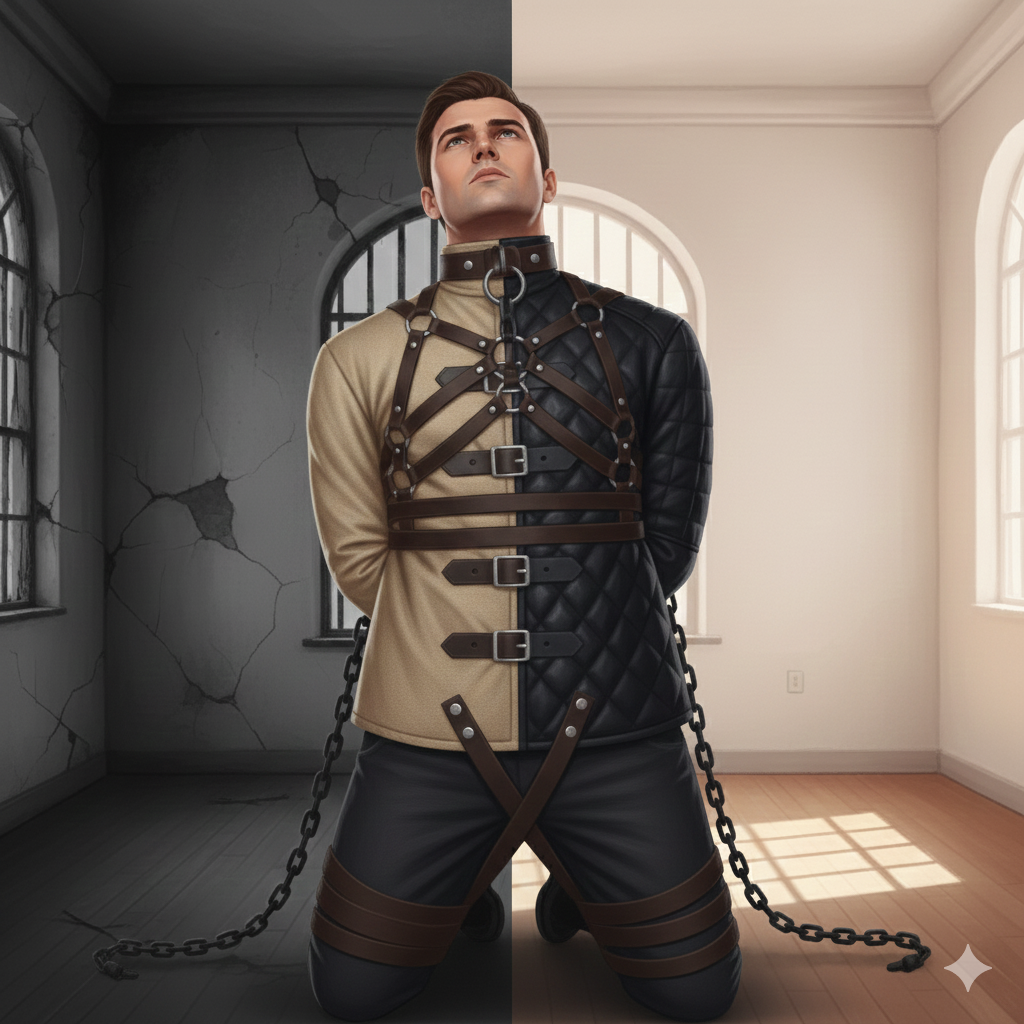
The image of a man in a straitjacket has long been used as a cultural symbol. Historically, it represented madness, danger, or institutional control. In modern contexts, its meaning varies widely.
Common interpretations include:
- Performance art and escape acts
- Symbolic storytelling about confinement
- Consensual power exchange scenarios
The same image can convey entirely different meanings depending on context, consent, and intent.
How Does a Straitjacket Restrict Movement?
A straitjacket limits arm mobility through:
- Crossed sleeves that secure the arms
- Adjustable torso straps
- Restricted shoulder range of motion
- Back fastenings that prevent self-release
When properly fitted, it restricts arm use while allowing normal breathing and circulation.
Safety, Consent, and Ethical Considerations
Straitjackets are highly restrictive devices. Their use outside historical or medical contexts requires strict safety standards.
Essential Safety Principles
- Clear, informed consent
- No use on minors
- Continuous supervision
- Ability to remove the jacket quickly
- Agreed time limits
- Emergency cutting tools available
Any activity should stop immediately if distress, discomfort, or breathing difficulty occurs.
Psychological Considerations and Aftercare
Restraint can create intense psychological responses, including vulnerability, anxiety, or emotional release. For this reason, aftercare is often emphasized in consensual restraint practices.
Aftercare may include:
- Verbal reassurance
- Physical comfort (if agreed upon)
- Discussion of the experience
- Emotional grounding
This step helps maintain trust and emotional safety.
Common Myths and Misconceptions
- Myth: Straitjackets are common in modern hospitals
Fact: Their medical use is now extremely rare. - Myth: Straitjackets are torture devices
Fact: They were designed as a less harmful alternative to chains, though often misused. - Myth: Escaping a straitjacket is easy
Fact: Escape typically requires professional training and should not be attempted recreationally. - Myth: Only mentally unstable people use straitjackets
Fact: Modern consensual use occurs within controlled, adult contexts.
Frequently Asked Questions
What Is a Straitjacket?
A straitjacket is a garment-style restraint designed to immobilize the arms by securing them against the torso. It typically features extended sleeves that cross over the chest and fasten at the back using straps or buckles. Straitjackets are designed to restrict arm movement while allowing normal breathing when properly fitted.
Are Straitjackets Still Used?
Straitjackets are rarely used in modern medical or psychiatric care. Advances in medication, patient rights, and de-escalation techniques have largely replaced their institutional use. Today, straitjackets are most commonly found in performance art, historical reenactments, educational contexts, and consensual adult restraint practices.
What Is a Straitjacket Used For?
Historically, straitjackets were used in psychiatric institutions to prevent self-harm or violent behavior. In modern contexts, they are primarily used for theatrical performances, escape artistry, educational demonstrations, and consensual adult restraint scenarios where participation is voluntary and safety-focused.
How to Escape a Straitjacket?
Escaping a straitjacket is dangerous and typically performed only by trained escape artists under controlled conditions. It requires specialized knowledge, physical conditioning, and safety supervision. Attempting to escape a straitjacket without professional training is not recommended due to the risk of injury.
Where Can I Buy a Straitjacket?
Straitjackets intended for recreational and consensual use are best purchased from established manufacturers and specialty retailers that focus on restraint equipment rather than costume or novelty products. Reputable sellers prioritize durable materials, secure fastenings, and safety-conscious construction. The Green Tanners offers straitjackets designed for informed adult use, emphasizing quality craftsmanship, material integrity, and responsible design.
Final Summary
Straitjackets occupy a unique place in history and modern culture. Understanding their design, purpose, and ethical implications allows for accurate discussion and responsible representation. When viewed through the lens of consent and context, the modern conversation around straitjacket bondage is fundamentally different from its historical origins.
References
Historical records, academic research, and current guidance on restraint use and ethics support the information in this article:
- Wikipedia – Straitjacket
General definition, historical background, and cultural context of straitjackets.
https://en.wikipedia.org/wiki/Straitjacket - The Lancet – The Straitjacket
Academic discussion on the historical and ethical implications of straitjacket use in psychiatric care.
https://www.thelancet.com/journals/lancet/article/PIIS0140-6736(16)30206-9/fulltext - NICE (UK) – Preventing and Managing Violent or Aggressive Behaviour
Modern clinical standards focus on de-escalation and minimizing restrictive interventions.
https://www.nice.org.uk/guidance/qs154/chapter/quality-statement-2-preventing-and-managing-violent-or-aggressive-behaviour - Care Quality Commission (CQC) – Physical and Mechanical Restraint Guidance
Oversight and ethical considerations related to restraint practices in care environments.
https://www.cqc.org.uk/sites/default/files/20180322_900803_briefguide-restraint_physical_mechanical_v1.pdf